
The Poutly Beauty Journal is Poutly’s own beauty publication.
Sheer color leaves room for your own. Rather than covering your lips completely, it lets some of their natural tone show through, so choosing a shade is less about finding a perfect name and more about noticing how color looks on you.
First, a little translucence
A sheer lip color is one that allows your natural lip tone to remain visible. Buildable means you can apply additional layers to increase the color’s presence. One light layer may look like a soft wash; more layers can make that same shade appear richer.
That’s why the shade in a tube, on a screen or on someone else’s lips may not look quite the same on yours. Your natural lip depth, the relative lightness or darkness of your bare lip color, shows through and changes the final impression. A pale wash can look more distinct on lightly pigmented lips, while deeper natural lip color may make that same wash appear subtler or shift its tone.
Skin undertone can also help you narrow the field. Undertone is the subtle warm, cool or balanced quality beneath the surface color of your skin. Warm undertones often lean golden, peachy or yellow; cool undertones often lean pink, red or blue; neutral undertones sit somewhere between. These are useful starting points, not rules. Makeup artists also recommend considering your natural lip color, rather than relying on skin tone alone.[^1]

Illustrative image: a soft rosy lip look. It is not a shade match or a product result.
Neutral, with a point of view
For an everyday neutral, start with the natural color of your lips. “My lips but better” is a helpful first thought, not a requirement to find a beige that disappears into your skin. A neutral can be rosy, brown, pink-beige or a blend, depending on your own coloring.
Look at the center of your bare lips in natural light. Is the color more pink, peach, rose, brown or mauve? Try a sheer neutral near that family, then adjust the depth or warmth if you want more definition. A shade close to your lip color tends to feel subtle; one that is a little deeper or warmer can feel more polished. Neither is more correct.
When you’re choosing between two neutrals, consider the look you want. A lighter, softer neutral can keep the effect quiet. A deeper rose-brown may give more contrast. If one shade looks pale or disconnected on you, try a slightly richer version or a shade with a different undertone rather than ruling out neutrals altogether.
Pink is a whole spectrum
Soft pinks often give a gentle hint of color. Dusty or muted pinks can feel understated, while a brighter, deeper pink may look more vivid and noticeable, especially when layered. “Pink” can mean petal, rose, mauve or something closer to berry; the name alone won’t tell you how it will read on your lips.
Use your natural lip tone as the baseline. If your lips are already rosy, a soft pink may blend in; a mauve or deeper pink may add more contrast. If your lips are paler, even a gentle pink may stand out more. And if your skin undertone is warm, cool or neutral, use that as a loose guide to which pinks you might want to try, not a reason to rule out a shade you like.
A useful first test is one thin layer. Check the color before adding more. Build gradually until the pink has the presence you want.
A red, softened
A sheer red can feel more forgiving than an opaque red because it gives your natural lip tone room to show through. The result is often softer around the edges and less like a solid block of color. That doesn’t make every red subtle: a brighter shade or several layers can still make a statement.
Warm coral-reds tend to lean orange or peach, while blue-leaning reds tend to appear cooler, sometimes with a berry or cherry quality. If you’re unsure, try one from each direction in a sheer layer and notice which feels more harmonious with your lip color. Natural lip tone and the intensity you want matter as much as any undertone rule.

Illustrative image: a warm coral-red lip look. It is not a shade match or a product result.
Try it in real light
A few small checks can make shade decisions easier:
- Start with a clean baseline. Look at bare lips in daylight, ideally near a window. Artificial light can shift how warm, cool or bright a color seems.
- Swatch where it counts. A fingertip pad can offer a quick color comparison. For a closer idea of the result, try the shade on the inner lip or lower lip using a clean hand or a single-use applicator. Makeup artists caution that the back of the hand may not show how a shade will look on the lips.[^1]
- Check the color in daylight. Look once in indirect daylight before deciding. Warm indoor bulbs and cool overhead lighting can change how a shade reads.
- Treat screens as a preview, not a promise. Display brightness and settings affect color. Digital images are useful for comparing shade families, but they can’t show exactly how a shade will look over your natural lip tone.
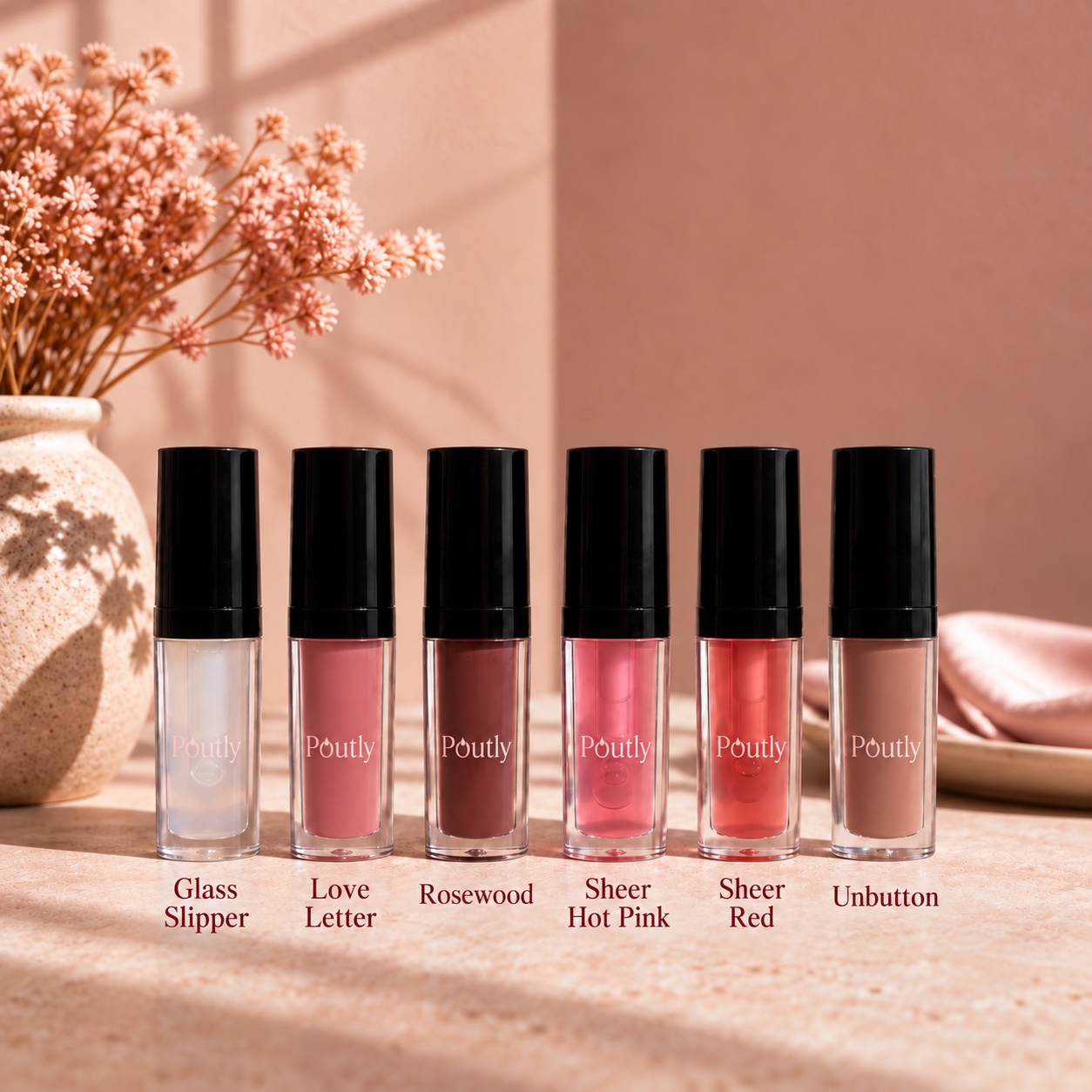
Digital shade guide. Appearance varies with lighting, screen settings and natural lip tone.
Let texture have a say
Very dry or flaky lips can make any sheer shade look less even, because color may catch on visible texture. If your lips feel uncomfortable, keep makeup application gentle. A simple, non-irritating lip balm or ointment is a care category to consider for chapped lips; it is separate from the cosmetic job of adding color or shine. The American Academy of Dermatology shares general guidance on choosing lip care for dry, chapped lips.[^2]
When lips feel comfortable, color may appear more even. There’s no need to scrub or force a smooth finish; take a break from color if applying it feels uncomfortable.
A small shade wardrobe
If you like having a few options, think in roles rather than rules:
- One everyday neutral that sits near your natural lip color.
- One pink for a little more visible color, in a soft or deeper tone.
- One statement sheer red for days when you want a brighter focus.
Each shade has a different mood. Your neutral is the easy default; pink brings a fresh shift; red adds a little more presence while staying translucent. You don’t need all three to find a shade that feels like you.
As one shade map to explore, our Glass Glaze Lip Oil comes in six sheer, buildable shades: Glass Slipper (soft, near-clear neutral), Love Letter (soft dusty pink), Rosewood (deep rose-brown), Sheer Hot Pink (rosy pink with mauve tones), Sheer Red (warm coral-red) and Unbutton (warm rosy nude). Digital swatches are guides; appearance can vary with lighting, screen settings and natural lip tone. If you’d like, take a look through the shades and start with the color family that feels closest to your everyday.
Sources
[^1]: Glamour UK, “How to Apply Lipstick, According to Makeup Artists”
[^2]: American Academy of Dermatology, “7 Dermatologists’ Tips for Healing Dry, Chapped Lips”